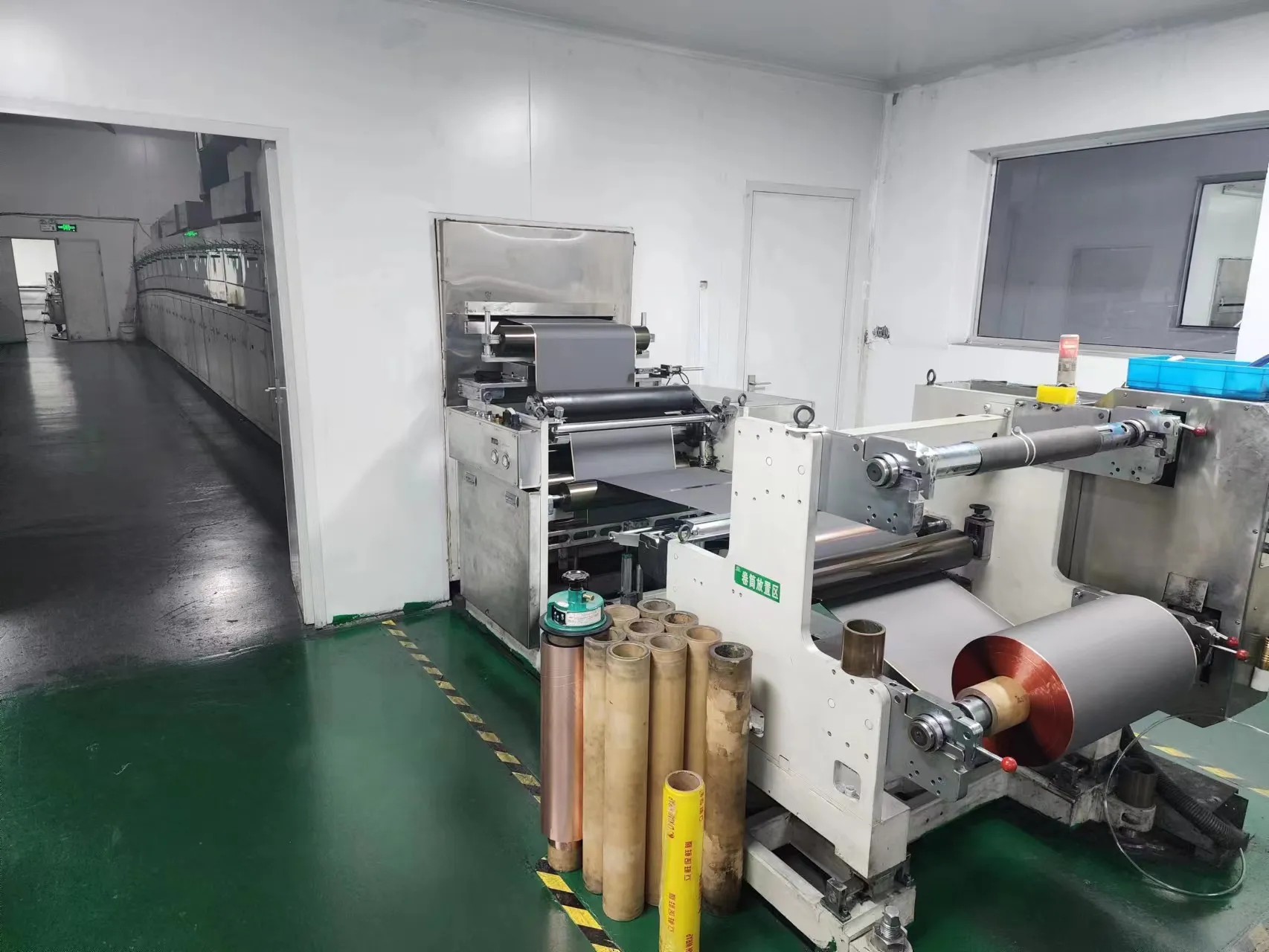
Why investors are watching solid state batteries closely
This is an educational framework reviewed August 13, 2026, not a recommendation to buy or sell a security. Company status, cash balances, share prices, ETF holdings and commercial timelines change; verify each item in the latest filing, investor presentation and exchange data before making a decision.
Solid state batteries represent one of the most consequential potential shifts in energy storage in decades. If they reach commercial production at competitive cost, they could displace liquid electrolyte lithium-ion cells in electric vehicles, consumer electronics, and grid storage — a market worth hundreds of billions of dollars annually.
The commercial argument is straightforward: solid state batteries promise higher energy density (meaning longer EV range), faster charging potential, and improved safety. Each of those properties commands a price premium in the EV market, and automakers are racing to be first to offer them.
The investment argument is more nuanced. The technology has been "five years away" from commercialisation for nearly two decades. The difference now is that Toyota, Samsung SDI, QuantumScape, and CATL have moved from conceptual research to pre-production validation. The question is not whether solid state batteries will exist — it is who will manufacture them profitably and when.
- Market size: the global EV battery market exceeded $90 billion in 2023 and is forecast to surpass $300 billion by 2030 (BloombergNEF).
- Price premium potential: solid state batteries are expected to command a 2–4× cost premium over NMC at initial volumes, compressing as scale increases.
- First-mover advantage: the automaker that certifies solid state packs first gains a meaningful marketing and warranty differentiation edge.
- Supply chain lock-in: solid state requires different materials (ceramic electrolytes, dry-room manufacturing) that create long supply chain commitments once established.
Pure-play public companies: the high-risk, high-upside path
A small number of publicly traded companies are focused primarily on solid state battery development. These are pre-revenue technology bets, not operating businesses with stable cash flows.
QuantumScape (NYSE: QS) is the most prominent. Backed by Volkswagen and Bill Gates, it is developing a lithium metal anode with an oxide solid electrolyte separator. QuantumScape has published strong technical data and is in late-stage pre-production validation with Volkswagen's PowerCo. As of mid-2026, it remains pre-revenue with significant quarterly cash burn. The stock has been highly volatile since its 2020 SPAC listing.
Solid Power (NASDAQ: SLDP) has development partnerships with BMW and Ford. It focuses on sulfide-based solid electrolyte cells and has a pilot production line. Like QuantumScape, it is pre-revenue and dependent on partnership milestones and capital raises to fund operations.
The risk profile for both companies is binary in a meaningful sense: if they achieve commercial production at competitive cost, the upside is substantial. If timelines slip further or a larger competitor (Toyota, Samsung SDI, CATL) reaches scale first, the investment thesis weakens significantly.
| Company | Ticker | Key partner | Status | Primary risk |
|---|---|---|---|---|
| QuantumScape | NYSE: QS | Volkswagen / PowerCo | Pre-production validation | Timeline delay, cash runway |
| Solid Power | NASDAQ: SLDP | BMW, Ford | Pilot production line | Scale-up execution, funding |
This is not financial advice. Both companies are pre-revenue. Verify current financial position before any investment decision.
Auto OEM exposure: the lower-risk indirect play
If the pure-play volatility is too high, automotive OEMs and their battery subsidiaries offer indirect solid state exposure with the ballast of existing revenue from conventional vehicles.
Toyota (NYSE: TM) has the most aggressive public solid state timeline of any major automaker, targeting commercial vehicles with solid state batteries between 2027 and 2028. Toyota also holds more solid state battery patents than any other organisation globally, according to patent data compiled by Nikkei. A Toyota investment is broadly diversified across conventional vehicles, hybrids, and the solid state bet.
Samsung SDI (KRX: 006400) is a major battery supplier developing solid state cells for premium EVs, targeting 2027. It supplies BMW's existing battery packs and is investing heavily in next-generation chemistry.
Panasonic (OTC: PCRFY) supplies Tesla and has announced solid state R&D investment, though its timeline is less public than Toyota's or Samsung SDI's.
The advantage of OEM exposure is that the investment does not depend entirely on solid state commercialisation succeeding on schedule — the rest of the business continues generating revenue regardless.
Battery ETFs with solid state exposure
Exchange-traded funds offer diversified exposure to the battery and EV supply chain without requiring stock selection. Several ETFs hold meaningful positions in companies with solid state development programs.
The Global X Lithium & Battery Tech ETF (LIT) is the most widely held battery-focused ETF. It holds Albemarle, SQM, BYD, Samsung SDI, and other lithium and battery supply chain companies. Solid state exposure is indirect through cell manufacturers and material suppliers.
The KraneShares Electric Vehicles and Future Mobility ETF (KARS) holds a broader set of EV-adjacent companies including automakers, suppliers, and battery makers. It provides exposure to the demand side of solid state batteries through the EV market broadly.
The iShares Self-Driving EV and Tech ETF (IDRV) includes major automakers and tech companies involved in electrification. Toyota and other solid-state-investing OEMs appear in the portfolio.
None of these ETFs are pure solid state plays. They are diversified across existing lithium-ion, EV demand, and emerging battery technologies simultaneously.
The real risks before committing capital
Solid state battery investment carries several risks that are easy to underestimate from the outside.
Timeline risk is the most persistent. Toyota originally targeted 2020 for solid state EVs, then 2025, and now 2027–2028. QuantumScape has revised its production timeline multiple times. Every delay extends the period during which invested capital earns no return and faces dilution from ongoing fundraising.
Manufacturing scale-up is unproven. Lab cells and small pilot runs do not guarantee that the same chemistry and performance can be achieved at millions of cells per year. Yield rates, dry-room manufacturing requirements, and supply chain for ceramic electrolyte materials are all open execution questions.
Chinese competition is accelerating. CATL's semi-solid batteries are already in commercial vehicles in China. BYD is investing in solid state R&D. If a Chinese producer reaches cost-competitive full solid state before Western companies, the market dynamics shift significantly.
Incumbent lithium-ion keeps improving. LFP batteries continue to get cheaper and more energy-dense. If solid state commercialises five years later than projected, the gap it needs to close against improved LFP narrows.
What milestones to watch before investing
Rather than reacting to press releases, investors in solid state should track specific technical and commercial milestones that signal genuine progress.
The most meaningful signal is first verified commercial shipment in a production vehicle — not a concept car or press announcement. When Toyota or a comparable OEM delivers a solid state vehicle to paying customers and the pack goes under warranty, the commercialisation risk decreases substantially.
A second milestone is cost per kilowatt-hour disclosure. Until solid state cells can be produced at below $150/kWh at the pack level, they are not cost-competitive with LFP for volume EV production. Any credible cost roadmap published by a manufacturer is worth examining carefully.
Third, watch gigafactory investment commitments. When a major battery producer breaks ground on a solid state-specific manufacturing facility at gigawatt-hour scale, that signals genuine commercial conviction beyond research agreements and pilot lines.
FAQs
Can you buy solid state battery stock?
Yes. QuantumScape (QS) and Solid Power (SLDP) are publicly traded on U.S. exchanges and are the most direct pure-play options. Both are pre-revenue as of mid-2026. Indirect exposure is available through Toyota (TM), Samsung SDI, and battery ETFs such as LIT or KARS.
Is investing in solid state batteries risky?
Yes, particularly in pure-play companies. Both QuantumScape and Solid Power are burning cash without revenue, and their timelines have shifted before. The risk is meaningful. Diversified exposure through OEMs or ETFs reduces company-specific risk but still carries technology and execution risk from the sector overall.
Which ETF has the best solid state battery exposure?
No ETF is solely focused on solid state batteries. Global X Lithium & Battery Tech (LIT) has the most concentrated battery supply chain exposure, including Samsung SDI and other cell manufacturers with solid state programs. KraneShares KARS and iShares IDRV offer broader EV-sector exposure including OEMs.
When will solid state battery investments pay off?
Commercial production at meaningful scale is targeted for 2027–2029 by leading companies. If those timelines hold, early investors could see catalysts as milestones are confirmed. If timelines slip again, capital is tied up longer. Most analysts treat solid state as a 3–7 year investment horizon, not a 12-month trade.
Is Toyota a good way to invest in solid state batteries?
Toyota holds more solid state battery patents than any other organisation and has the most aggressive commercial timeline of any major automaker. Investing in Toyota provides solid state exposure with diversification across conventional vehicles and hybrids. The downside is that Toyota's stock will not move as sharply as a pure-play startup if solid state hits milestones ahead of schedule.
Sources and further reading
- BloombergNEF: Electric Vehicle Battery Price Survey 2023 — global battery market forecast
- QuantumScape SEC filings and investor presentations 2023–2026
- Solid Power SEC filings and BMW/Ford partnership updates
- Nikkei Asia: Toyota holds most solid-state battery patents globally
- Reuters: Solid state battery commercialisation timeline analysis 2024
Related Blogs
Learn More About Battery
Why Are Solid State Batteries So Expensive? Materials, Yield, and Scale Explained
Which U.S. Vehicles Use Solid-State Batteries in 2026? Verified Status by Model
How to Verify Solid-State Battery Claims: A 10-Point Reality Check
Related Products
Related product
Cylindrical Series
AB-21700 Semi Solid Cylindrical Cell
- Energy Density
- 300 Wh/kg
- Nominal Voltage
- 3.7 V
Prismatic Series
AB-100AH Semi Solid Prismatic Cell
- Energy Density
- 285 Wh/kg
- Nominal Voltage
- 3.65 V
Pouch Cell Series
AB-50AH Semi Solid Pouch Cell
- Energy Density
- 320 Wh/kg
- Nominal Voltage
- 3.7 V