Energy & mass
Define the required usable energy and battery mass limit alongside the aircraft payload. Flight time depends on the complete aircraft and mission profile.
Drone & UAV power systems
Plan your drone battery integration around the mission, payload and aircraft limits. Explore AntBattery’s 350 and 400 Wh/kg semi-solid-state series with 6S–24S configurations, then review the exact pack requirements with our team.
Define the required usable energy and battery mass limit alongside the aircraft payload. Flight time depends on the complete aircraft and mission profile.
Provide hover, climb and payload current, including peak duration. A C-rate alone does not establish the current available for your aircraft.
Check the battery bay, mounting, centre of gravity, connector, BMS and charger against the exact pack configuration.
Share route length, cruise load, take-off weight and the required landing reserve. Review usable energy across the full mission.
Provide hover time, repeated climb loads, payload power and operating conditions for the inspection route.
Specify payload mass and power demand, take-off current and the available battery weight budget.
Start with the aircraft voltage window, pack envelope and telemetry requirements, then define a sample validation plan.
Both series use semi-solid-state technology, with continuous 5C charge and discharge, a 10C burst rating and configurable 6S–24S packs. Confirm burst duration, operating direction and test conditions for your application.
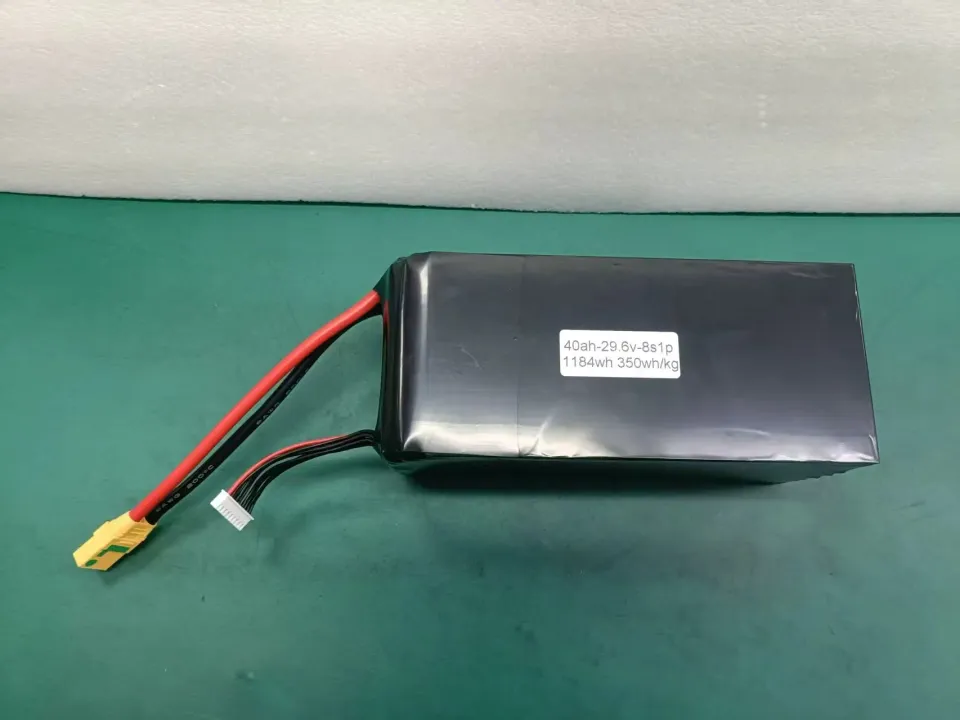
350 Wh/kg supplied energy-density rating. Explore configuration options and review the 8S reference pack separately from your requested SKU.
View 350 Wh/kg series & choose SKU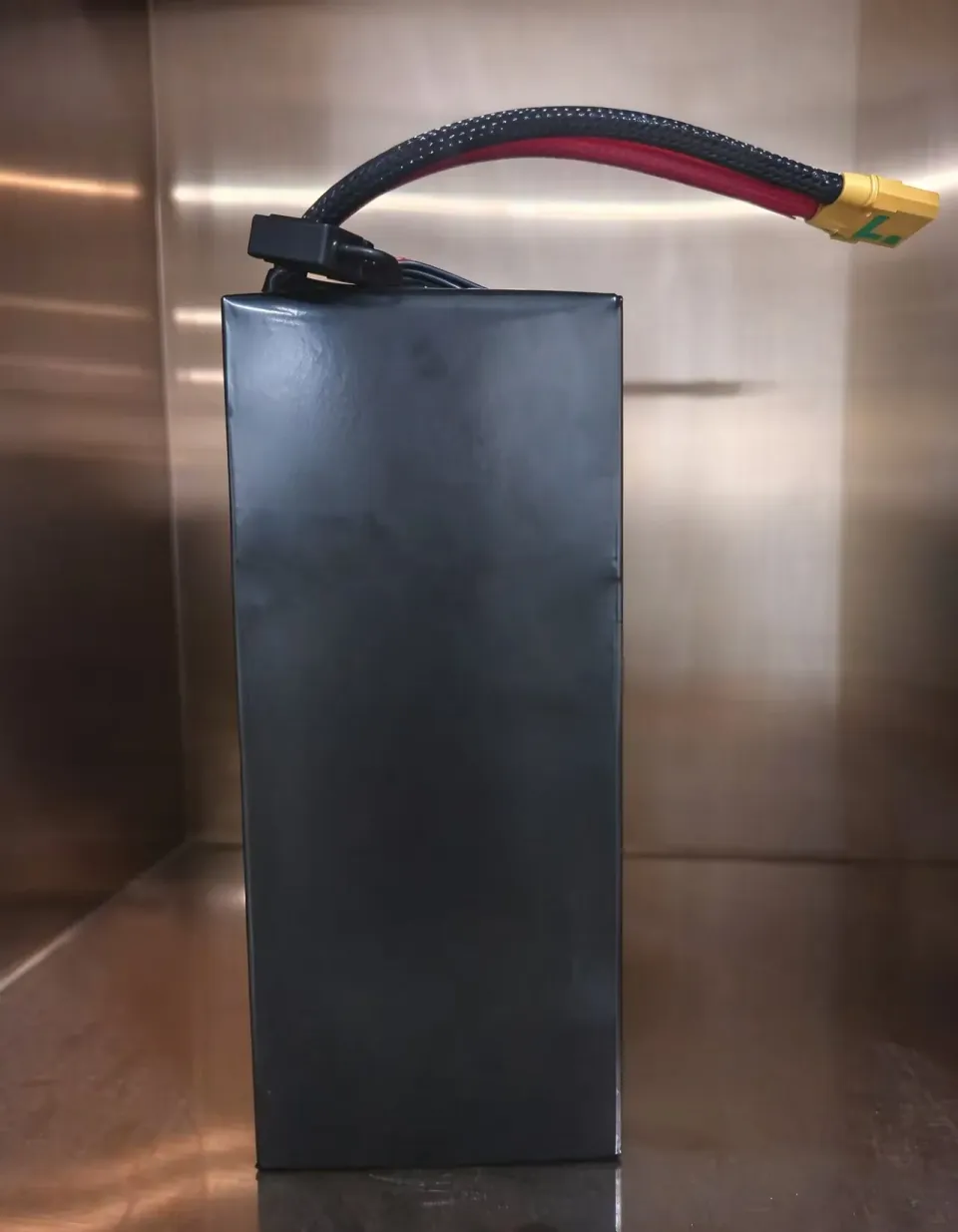
400 Wh/kg supplied energy-density rating. Explore configuration options and review the 6S reference pack separately from your requested SKU.
View 400 Wh/kg series & choose SKUThe 350 and 400 Wh/kg figures are supplied ratings. Confirm whether each applies to cells or a complete pack, and request the relevant test data. Reference sample dimensions, energy and mass do not apply to every configuration.
Compare both series in the UAV battery pack catalogueChoose a 6S–24S series configuration against the aircraft controller and charger voltage limits. Series count alone does not define compatibility.
Supply the required Ah or Wh, mission load and landing reserve. Confirm capacity and voltage for the selected SKU.
Review continuous and burst current, peak duration and operating temperature with the configuration-specific data.
Provide maximum length, width, height and mass, plus mounting and centre-of-gravity constraints.
Confirm the power and balance connectors, cable routing, BMS, communication and charging profile.
Review restraint, vibration, cable strain relief, clearances and aircraft balance with the final pack drawing.
Match connectors, protection, controller limits, charger settings and thermal conditions to the selected configuration.
Agree ground-load checks and a controlled flight-validation plan, including voltage sag, temperatures and landing reserve.
Request a configuration-specific datasheet, dimensional drawing, charge and discharge information, and available validation or transport documents. Availability and applicability depend on the exact pack and destination and are confirmed individually.
Read the UAV battery technology and supplier checks guideBegin with your aircraft energy, current, dimensions and mass limits. Review the exact pack data for each series; energy density alone does not determine the best fit. Confirm the cell-versus-pack basis and test conditions for each stated rating.
Both series offer 6S–24S configurations for engineering review. Capacity, voltage limits, dimensions, mass, interfaces and availability must be confirmed for the selected SKU.
Both series are specified with continuous 5C charge and discharge ratings and a 10C burst rating. Burst duration, operating direction and test conditions require confirmation. Current in amperes depends on the confirmed capacity.
Replacement requires a review of voltage limits, current demand, physical fit, mounting, connectors, BMS, communication and charger compatibility. No universal drop-in fit is assumed.
Use the aircraft power profile, usable pack energy, payload, operating conditions and landing reserve, then validate with the aircraft. A Wh/kg rating does not establish a flight-time gain.
Share the following details so we can review a suitable battery configuration.
Opens an email draft with a requirements checklist. Your request is sent when you send the email.