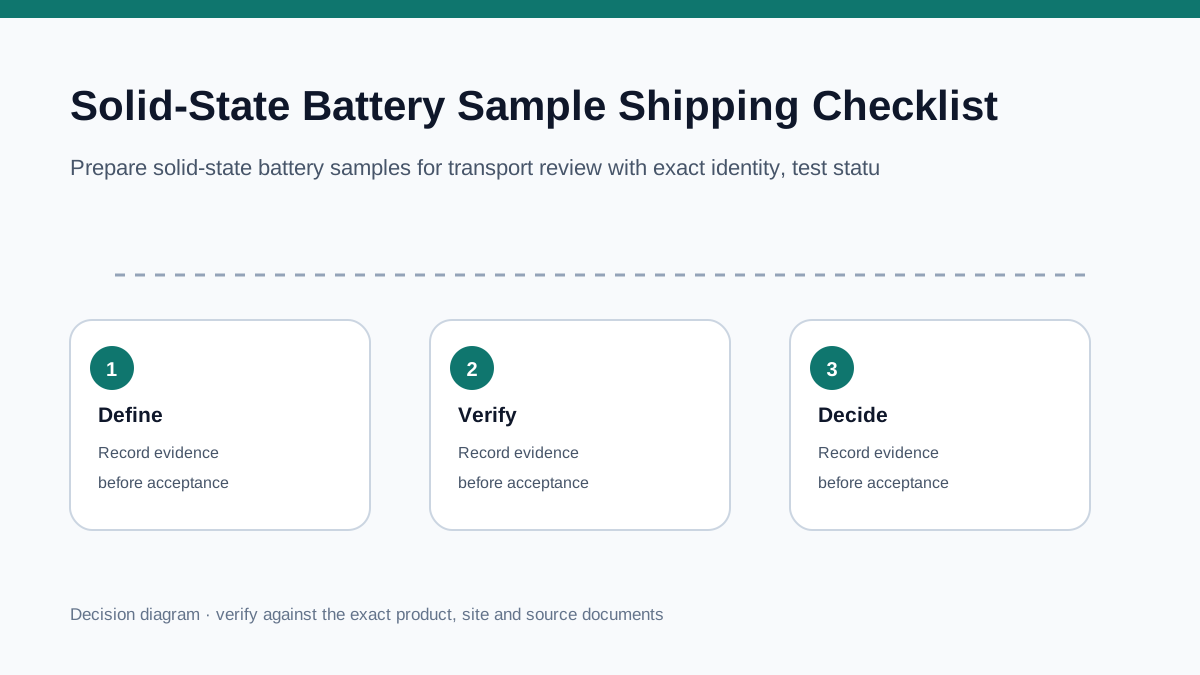
1. Freeze the sample identity before choosing a transport path
Use one sample ID across the purchase order, laboratory plan, design drawing, safety data, test summary or exception analysis, package record and shipment documents. Record manufacturer and shipper; model and design revision; lithium-ion or lithium-metal classification; voltage, capacity, energy, mass and dimensions; cell, battery, module or equipment configuration; prototype, low-production or tested-production status; test purpose; quantity; route; mode and proposed carrier.
If a design revision could affect transport testing, do not reuse an older model’s evidence without a documented applicability review.
2. Separate tested designs from prototype or low-production samples
Rules differ by transport mode and jurisdiction, so match each statement below to the mode you are actually using — do not assume a ground-transport rule covers an air or ocean leg of the same shipment.
US ground/domestic (49 CFR, US DOT/PHMSA). 49 CFR §173.185(a)(1) requires each lithium cell or battery to be of a type proven to meet the eight test series in Part III, Sub-section 38.3 of the UN Manual of Tests and Criteria — current edition ST/SG/AC.10/11/Rev.8 (effective 27 November 2023), as updated by Amendment 1 (12 September 2025). Separately, 49 CFR §173.185(a)(3) requires each manufacturer and subsequent distributor of an applicable lithium cell or battery (made on or after 1 January 2008) to make available a test summary containing ten specified elements — manufacturer identity, test-laboratory identity, a unique test-report identification number, the cell/battery model, and more. The test summary is a traceability document; it is not carrier acceptance.
Air transport (IATA DGR / ICAO TI). The IATA Dangerous Goods Regulations (67th Edition, effective 1 January 2026) Special Provision A88 governs pre-production prototype lithium batteries and low-production-run batteries. It is not a self-certified exemption: it requires prior approval from the competent authorities of both the State of origin and the State of the operator, plus compliance with Packing Instruction 910 of the ICAO Technical Instructions Supplement.
Sea transport (IMDG Code). The IMDG Code (Amendment 42-24, mandatory from 1 January 2026) instead applies Special Provision 188 — a conditional exemption for small lithium and sodium-ion cells and batteries under defined energy-content thresholds. That is a different mechanism from air mode's prototype provision (SP A88) and does not automatically extend the same low-production allowance to a vessel shipment.
Prototype and low-production provisions can apply only under the specific mode, jurisdiction and conditions above. The shipper must identify the legal basis, mode-specific rule, quantity boundary, purpose, packaging standard, approvals or notifications and carrier acceptance. Do not write “prototype—UN 38.3 exempt” and assume that is sufficient, and do not assume an air-mode approval (SP A88) carries over to an ocean booking under IMDG SP 188 or vice versa.
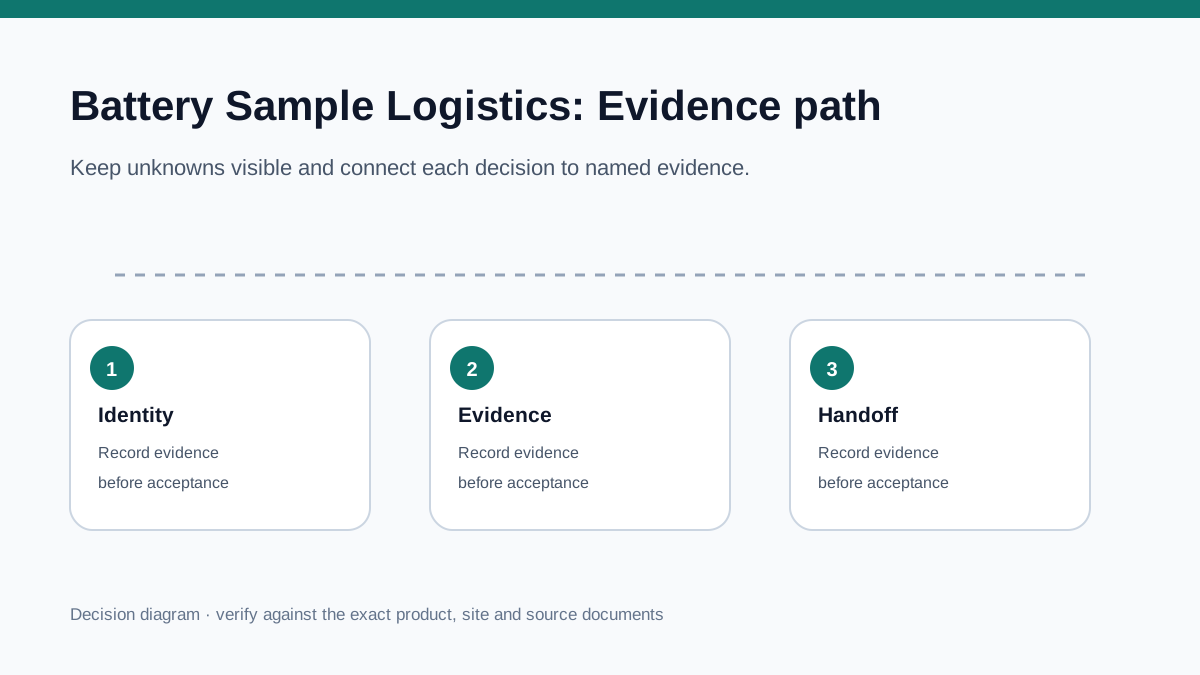
| Status | Evidence question | Required decision |
|---|---|---|
| Tested production design | Does the exact model/revision match a valid test summary? | verify model, report and design identity |
| Prototype for testing | Which provision permits this route and purpose? | qualified mode/jurisdiction review |
| Low-production run | Does quantity and production status meet the rule? | document eligibility and packaging path |
| Damaged, defective or recalled | Is transport allowed, restricted or prohibited? | stop ordinary booking and obtain specialist direction |
3. Build the document pack around the selected route
A useful supplier request includes exact design identity, UN 38.3 test summary when applicable, safety data, classification rationale, prototype or low-production analysis when claimed, package design, package test or approval evidence, marks and labels, state-of-charge controls where required, emergency contact, shipper qualifications and carrier acceptance.
Requirements and wording change by jurisdiction, mode, battery configuration and carrier. This article cannot determine the shipping description or packing instruction for a specific consignment.
4. Treat packaging as an engineered control
Packaging must prevent short circuits, damaging movement and unintended activation and meet applicable performance and mode rules. Record terminal protection, individual containment, cushioning, separation, orientation, closure, outer package, gross mass, marks, labels and packer. If thermal-management, pressure or experimental hardware changes the hazard, return the plan to the dangerous-goods specialist.
5. Confirm every handoff before pickup
The manufacturer, exporter, forwarder, carrier, transfer hub, broker and laboratory may each impose acceptance conditions. Ask the selected forwarder and carrier to review the actual document and package plan before pickup.
Record organization, responsible contact, route segment, documents reviewed, package version, booking or approval reference, acceptance limitations, date and next owner. A courier account that issues a tracking number has not necessarily completed dangerous-goods acceptance.
6. Set stop conditions
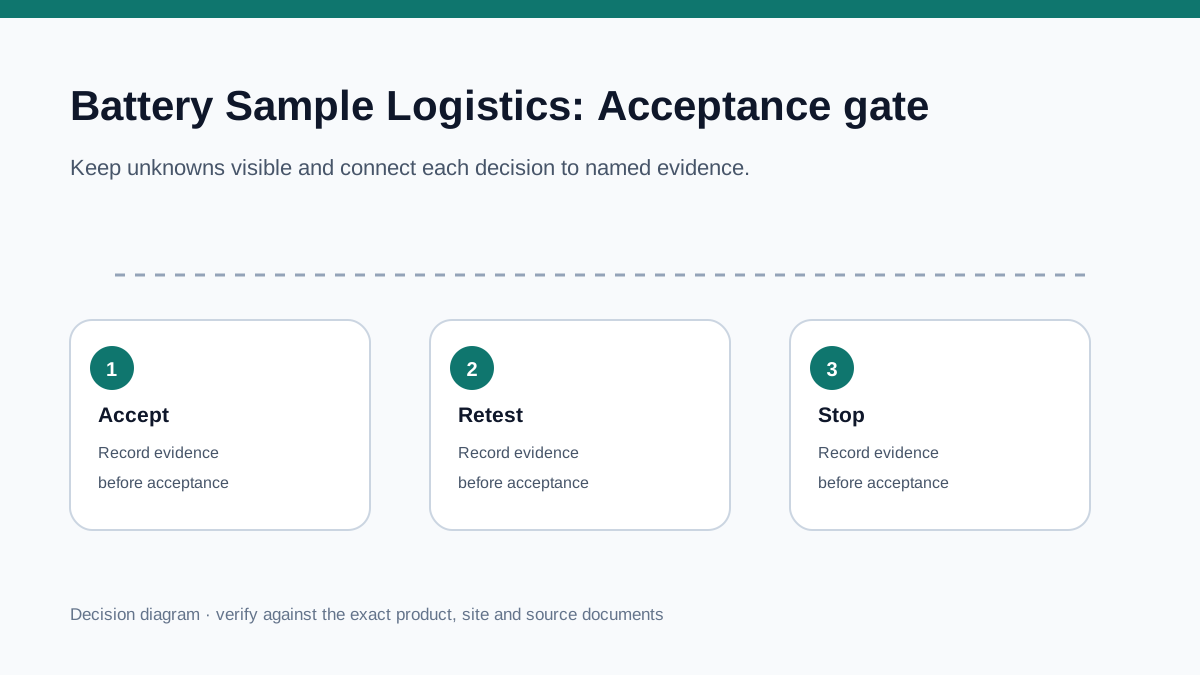
Stop when design identity is unclear, the test summary does not match, a prototype claim lacks a documented basis, packaging is not approved, the carrier has not accepted the consignment, sample condition is uncertain, or the laboratory cannot receive and store it safely.
Do not relabel a battery as a “sample,” “component” or “non-hazardous solid-state cell” to bypass controls. Solid-electrolyte terminology does not by itself remove lithium-battery transport requirements.
7. Send an RFQ that supports transport review
Send AntBattery the application, cell format, electrical and mechanical targets, sample quantity, test plan, destination and preferred mode. Ask for exact sample identity and available transport evidence. Final classification, packaging and booking remain with the authorized shipper, qualified dangerous-goods professionals and carriers.
FAQs
Do solid-state batteries still need dangerous-goods review?
Yes when they fall within applicable lithium-cell or battery transport rules. “Solid-state” is not itself a transport classification or exemption.
Does every sample need a UN 38.3 test summary?
Applicable tested designs generally require test-summary availability, while prototypes or low-production runs may follow specific provisions. A qualified review must determine the exact shipment path.
Can prototype batteries ship before UN 38.3 testing?
Sometimes a mode- and jurisdiction-specific provision may apply for transport to testing, but it carries defined quantity, purpose, packaging and other conditions. Obtain written specialist and carrier acceptance.
Is a safety data sheet enough?
No. The shipper still needs correct classification, applicable test or exception evidence, packaging, marks, labels, documents and carrier acceptance.
Who approves the final shipment?
The legal shipper and trained dangerous-goods personnel determine compliance, and every carrier must accept the actual route and package. A general supplier statement does not replace those decisions.
Sources and further reading
Related Blogs
Learn More About Battery
Related Products
Related product
Prismatic Series
AB-100AH Semi Solid Prismatic Cell
- Energy Density
- 285 Wh/kg
- Nominal Voltage
- 3.65 V
Pouch Cell Series
AB-50AH Semi Solid Pouch Cell
- Energy Density
- 320 Wh/kg
- Nominal Voltage
- 3.7 V
Cylindrical Series
AB-21700 Semi Solid Cylindrical Cell
- Energy Density
- 300 Wh/kg
- Nominal Voltage
- 3.7 V
Request a sample and evidence review
Request a sample and evidence review. AntBattery can organize design and supplier documents for comparison, but cannot promise carrier or authority acceptance for an unreviewed shipment.
Request a sample review