Define the decision before the metric
‘Evaluate the sample’ is too broad. State whether the work will screen a material or cell concept, compare suppliers under one laboratory method, confirm repeatability of a claim, assess suitability for a prototype, investigate a failure mode, or decide accept, retest or reject for a submitted lot.
Each decision needs different evidence. A small research cell can answer a mechanism question without demonstrating pack-level performance. A short cycle sequence can compare early behavior without proving service life. Keep every inference inside the tested sample, format, protocol and environment.
The US DOE Federal Consortium for Advanced Batteries publishes testing resources around performance and life behavior. The methodological lesson is to define test purpose before interpreting the number; do not borrow an application target without checking that the cell type and decision match.
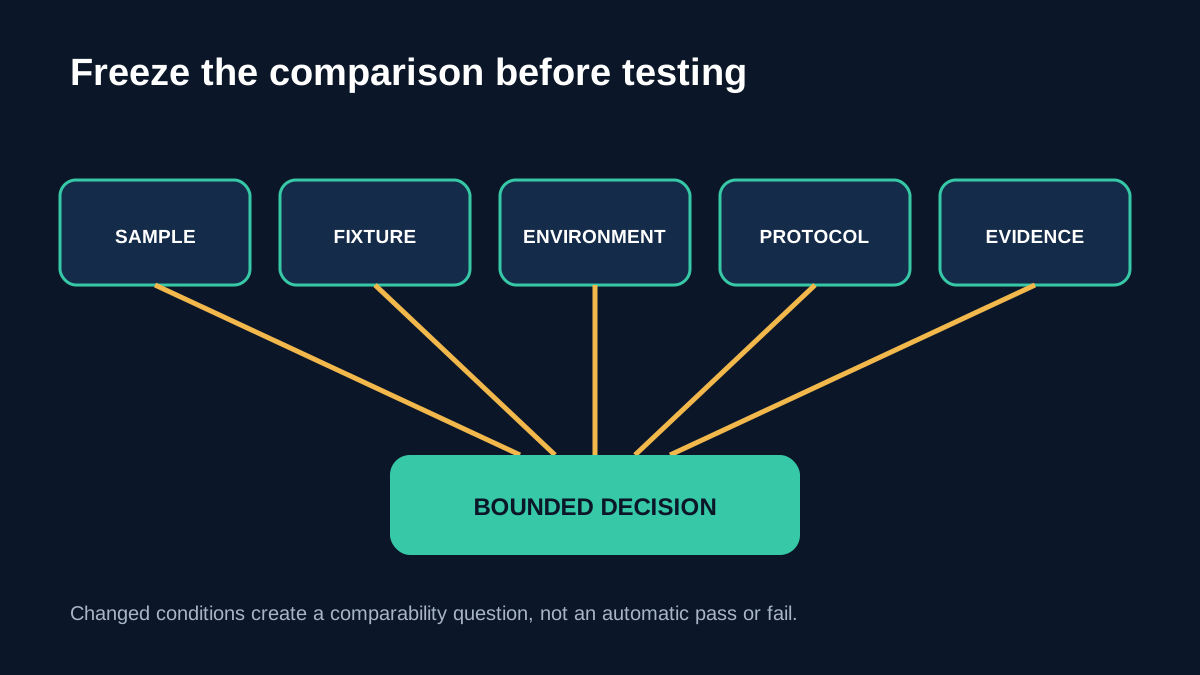
Freeze sample identity and custody
Assign a unique sample ID before conditioning. Record supplier lot or batch, composition description at the agreed disclosure level, dimensions, mass, electrode loading or capacity basis, separator and electrolyte system, current collectors, cell architecture, fabrication date, storage history and visible condition.
Photograph labels and packaging, record receipt time and condition, and link every test file to the sample ID. If confidentiality limits disclosure, agree stable coded fields so the sample class can still be traced. A result that cannot be tied to one identity should not enter the acceptance calculation.
Shipping and storage can alter a sample before testing. If a seal is compromised or exposure is unknown, use a quarantine and review branch instead of silently testing it as normal.
Lock the fixture and pressure method
Solid-state cells are sensitive to how interfaces are formed and maintained. A review of pressure effects describes how fabrication and stack pressure influence interfaces, transport and measured performance. That evidence does not supply one universal correct pressure.
Record fixture and cell geometry; how force or pressure is applied and measured; contact area and calculation basis; whether pressure is fixed, controlled or allowed to change; sensor location and logging; assembly versus cycling pressure; and the response to thickness or force drift.
Two tests reporting the same nominal pressure may still differ in area basis, fixture compliance, loading history or control method. Treat the complete method as a controlled variable.
Control temperature, formation and cycling
Record chamber or fixture temperature, soak time, sensor position and allowable variation. Define rests, formation steps, current or rate basis, voltage limits, cutoff logic, sampling interval and cycle sequence. If capacity is normalized, identify the denominator and how it was measured.
Do not compare a supplier’s best result at one temperature and pressure with an evaluator’s result at another. A Nature Energy paper on solid-state battery reproducibility highlights problems created by custom setups and inconsistent reporting and recommends fuller parameter reporting and replicate data.
Use a protocol-deviation log. If a cutoff, rest, fixture or thermal condition changes, mark the affected result rather than blending it with compliant data.
Add controls and an auditable evidence package
A control should isolate the decision. It might be a reference sample measured in the same fixture and sequence, a retained sample from an accepted lot, replicate specimens where feasible, a blank or fixture check, or a supplier benchmark reproduced under the agreed method. Literature measured in another architecture is context, not an acceptance control.
Agree sample count from test purpose, expected variability, available material and consequence of a wrong decision. Do not turn three samples or another count into a universal rule. When material is scarce, define how limited evidence changes confidence and what triggers more testing.
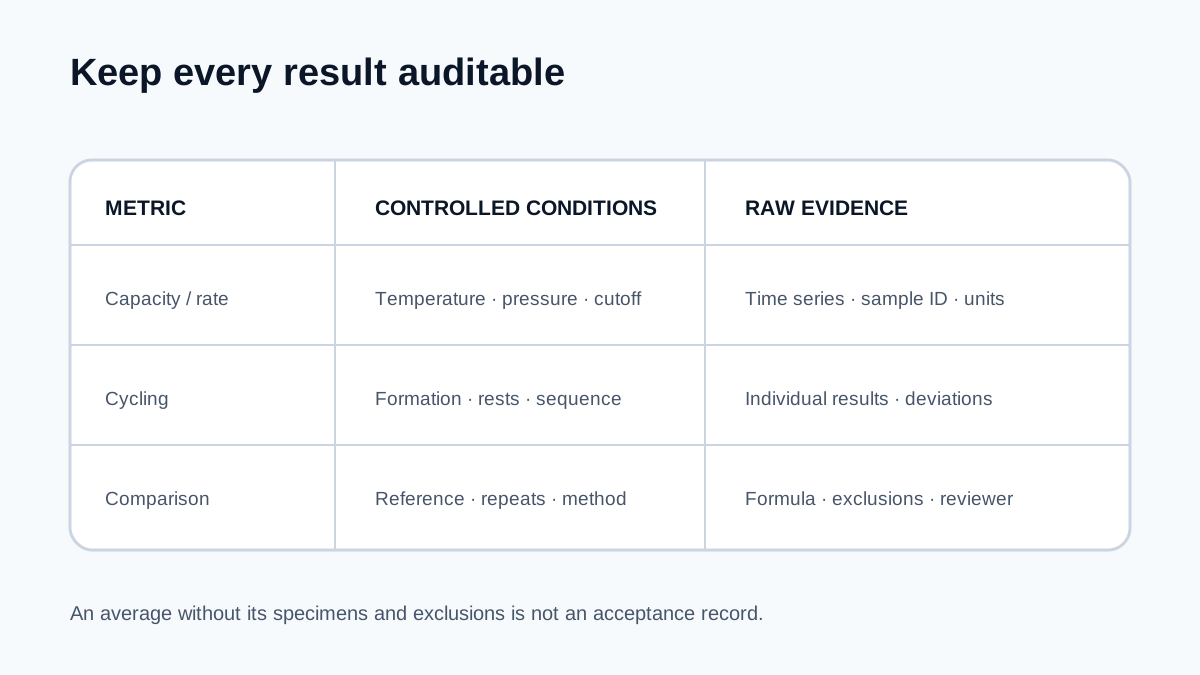
- Raw time-series data with units and sample IDs.
- Test-channel and equipment identifiers.
- Fixture, pressure and thermal logs.
- Protocol version, formula and normalization basis.
- Individual specimen results, not only an average.
- Deviation, interruption and excluded-data log.
- Post-test photographs, named reviewer and decision record.
Keep performance and safety boundaries separate
Capacity, rate response and early cycling do not substitute for safety evaluation. Define which reliability or abuse procedures are in scope, specimen state, setup, containment, stopping rules and authorized facility.
IEC 62660-2 is an example of a standard with a defined reliability and abuse scope for particular applications. It should not be cited as proof that every solid-state research sample has passed or as the automatic protocol for every evaluation.
Do not invent a pass threshold by copying a number from another chemistry, format or program. Use the applicable standard, customer requirement, lab procedure and risk review for the actual application.
Decide: accept, retest, reject or not comparable
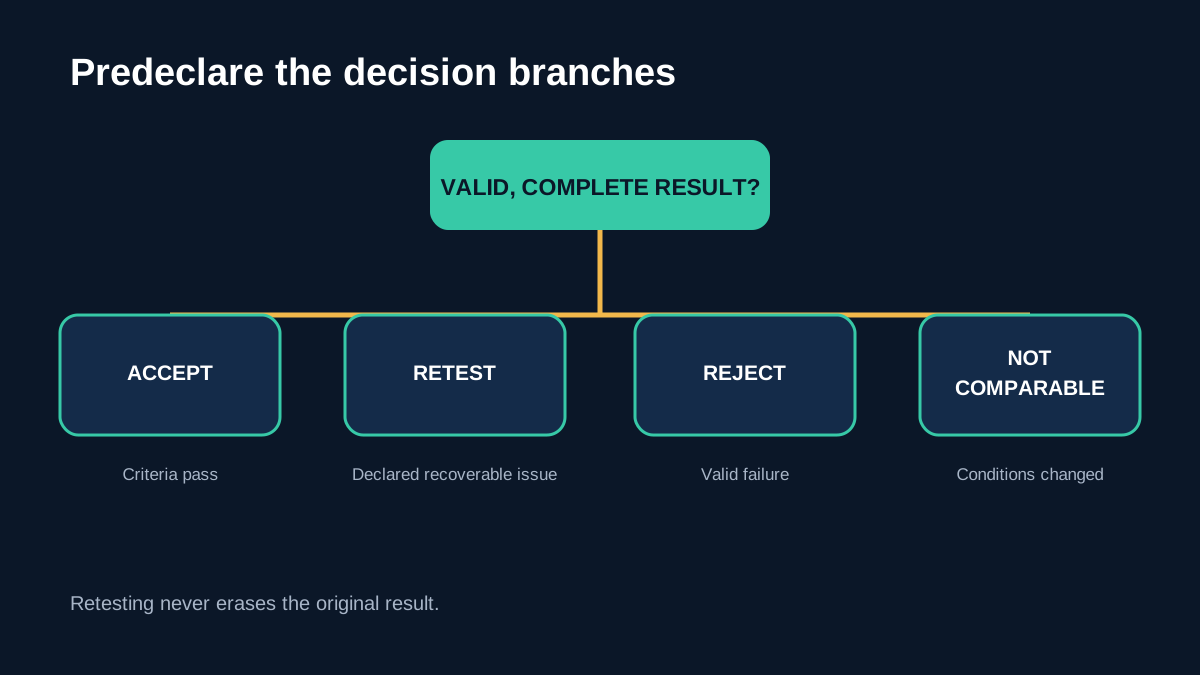
Write the branches before results arrive. Accept when identity is intact, mandatory controls and conditions are met, required evidence is complete and agreed criteria pass. Retest only when a defined recoverable issue exists, such as an equipment interruption, traceable fixture problem, insufficient valid replicates or a permitted borderline result; preserve the original result.
Reject when a valid result fails an agreed criterion, or when identity or custody failure makes the submitted lot unacceptable under the contract. Not comparable applies when changed conditions mean the result cannot answer the intended comparison. It is not a disguised pass or fail; repair the protocol or collect new evidence.
Prepare a technical inquiry
Review the battery product families to define format and application, then use the contact path to request identity fields, a proposed protocol and evidence package. Send the comparability contract with the inquiry instead of waiting for a report to reveal missing controls.
Supplier and evaluator do not need identical laboratories. They do need a shared statement of what is controlled, reported and allowed to support a conclusion.
FAQs
How many solid-state battery samples should be tested?
There is no universal count. Base it on the decision, expected variability, test destructiveness, available material and consequence of a wrong call. State the planned count and retest rule in advance.
What stack pressure should be used?
Use the value and control method justified for the exact cell architecture and objective. Report fixture, area basis, measurement method and loading history. Do not treat one literature value as universal.
Can capacity results from two laboratories be compared directly?
Only after checking construction, conditioning, temperature, pressure, protocol, cutoff logic, normalization and data treatment. Otherwise report separately or run a common reference.
What is a useful control sample?
One that isolates the decision under the same relevant method, such as an accepted retained sample, reference cell or replicate. Another architecture or protocol is context, not a direct control.
Does good cycling performance mean the sample is safe?
No. Performance and safety evidence answer different questions. Define separate in-scope safety procedures, specimen state, facility and criteria.
When should a sample be retested instead of rejected?
Retest only for a predeclared recoverable condition such as documented equipment interruption, insufficient valid specimens or a permitted borderline outcome. Do not erase a valid failure through unplanned repeats.
Sources and further reading
Related Blogs
Learn More About Battery
Related Products
Related product
Prismatic Series
AB-100AH Semi Solid Prismatic Cell
- Energy Density
- 285 Wh/kg
- Nominal Voltage
- 3.65 V
Cylindrical Series
AB-21700 Semi Solid Cylindrical Cell
- Energy Density
- 300 Wh/kg
- Nominal Voltage
- 3.7 V
Pouch Cell Series
AB-50AH Semi Solid Pouch Cell
- Energy Density
- 320 Wh/kg
- Nominal Voltage
- 3.7 V