Start with three questions: can the exact truck accept the proposed system, can the fleet charge it without a new bottleneck, and which costs would actually change? The method below helps you answer those questions without assuming a universal conversion price or payback period.
First, establish whether the truck can accept the system
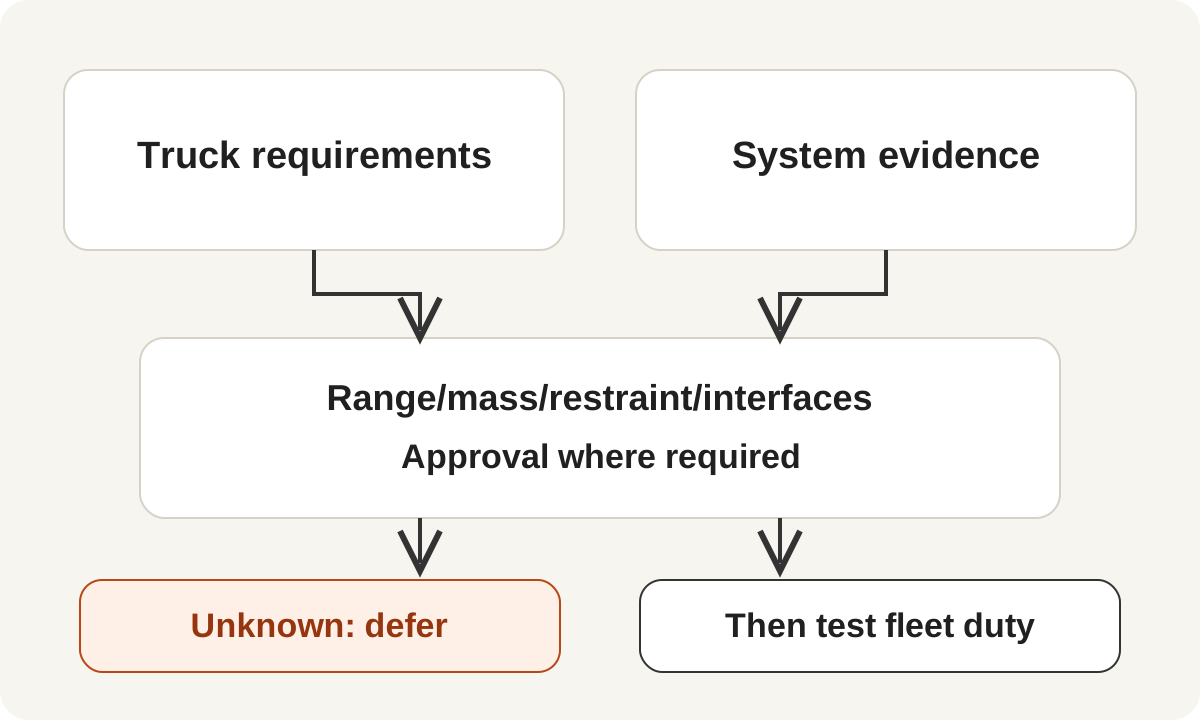
Before comparing battery quotations, identify the truck model and the battery requirements in its applicable documentation. A nominal voltage label is only one input. Build an eligibility record for each truck type rather than assuming that a battery offered for one forklift also fits the rest of the fleet.
Collect these items:
- The OEM's accepted complete system voltage range and applicable battery requirements.
- Specified battery mass and any capacity implications, plus the compartment dimensions and restraint requirements.
- Connector and interface information for the truck controller, battery management system (BMS) and proposed charger.
- The manufacturer's position on the proposed change, including any required written approval and changes to instruction plates or markings.
For US operations, OSHA 1910.178(a)(4) says that modifications and additions affecting capacity and safe operation must not be performed by the customer or user without the manufacturer's prior written approval. It also requires capacity, operation and maintenance instruction plates, tags or decals to be changed accordingly. This is not a statement that every routine battery exchange is such a modification; it is a reason to resolve the proposed change with the responsible manufacturer instead of treating it as automatically acceptable.
Do not choose a 24V, 36V, 48V or 80V class from a chemistry preference, an Ah figure or a category-page label. Begin with the exact truck requirements and have the complete proposed system evaluated against them. If required mass, interfaces or approval remain unknown, stop that candidate's conversion evaluation at the eligibility gate. A lower purchase price cannot resolve an unknown fit requirement.
Scroll the diagram horizontally to read every label.
Map charging to the fleet's actual shifts
The useful question is not simply whether a lithium-ion forklift battery can accept a charge during a break. It is whether the fleet has usable charging opportunities when each truck needs them, with compatible equipment actually available.
Crown's V-Force integrated lithium-ion system illustrates why the system matters. Crown describes lateral charging ports for opportunity charging, a BMS, and a charger that communicates with the BMS for proper charging. Its description of breaks and shift changes, including operation without extra batteries, concerns that named system. It is not evidence that an arbitrary replacement pack can deliver the same result.
Make a working-day map from operating records:
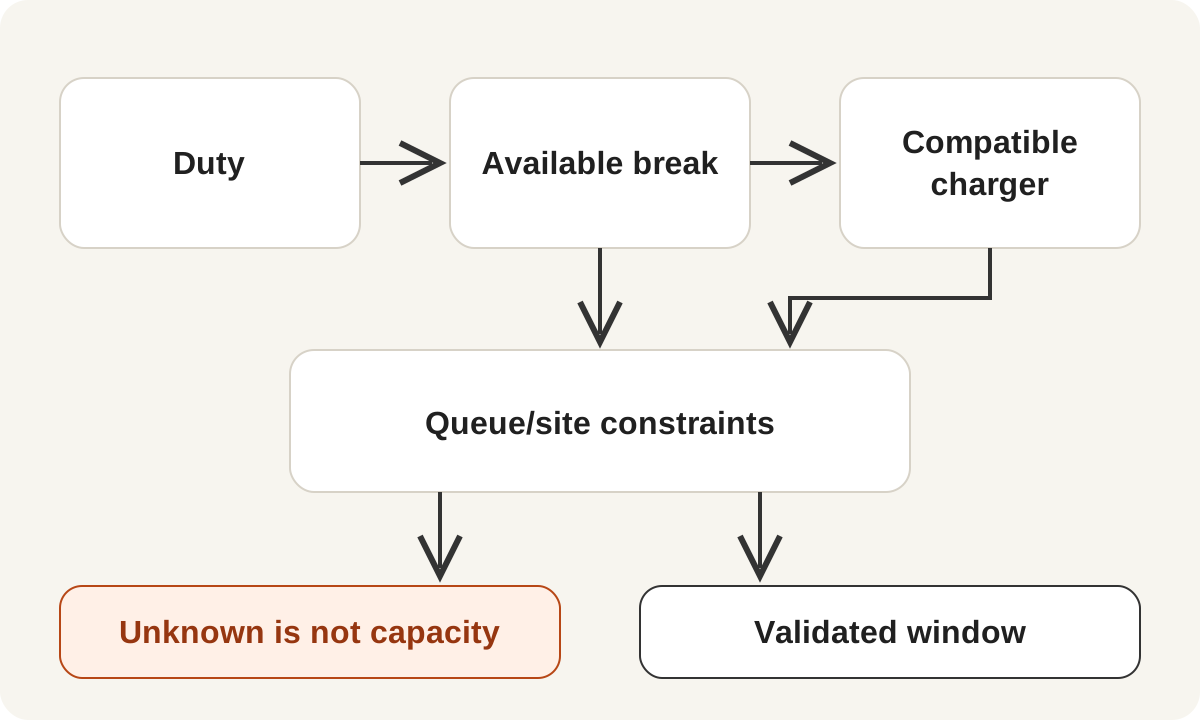
- 1. Record each truck's duty periods, breaks and shift handovers. Mark which breaks can actually be used for charging.
- 2. Assign the proposed compatible charger and location to each charging window. Check whether another truck needs it at the same time.
- 3. Identify unresolved electrical/site constraints, charger access and queues. Ask the responsible system provider to substantiate the proposed charging opportunity under those conditions.
- 4. Compare the resulting workflow with the current arrangement, including spare batteries, changes and handling where they are used. Do not remove baseline coverage from the plan until the alternative is supported.
This separates an available break from an available charger. If several trucks reach their charging windows together, treating each window as independently usable can hide a fleet bottleneck. Keep an unvalidated window or queue constraint unresolved rather than counting it as guaranteed charging capacity.
Scroll the diagram horizontally to read every label.
Site arrangements remain part of the evaluation. OSHA 1910.178(g) addresses changing and charging storage batteries, including designated charging areas, protection of charging apparatus and charging-area precautions. A proposed chemistry change alone does not establish that the site arrangements are acceptable. Have responsible personnel assess the applicable requirements and system instructions; this article is not a charging procedure or a complete compliance guide.
Compare the full cost of two workable fleet plans
Compare alternatives only after identifying an eligible system and a supported operating case. Otherwise, a cheap-looking proposal may depend on an unresolved truck or charging assumption.
Use the same service requirement and planning horizon for both paths: continuing or replacing lead-acid as needed, versus making the eligible lithium change. State the present batteries' condition and remaining-life assumptions, and record when replacements would occur. An already-paid lead-acid battery is not purchased again merely because it remains in use; future replacement belongs in the comparison when it is actually expected within the chosen horizon.
The table is an original planning method, not a measured AntBattery cost study. Fill it with current project quotations and fleet records.
| Cost or input | Continuing or replacing lead-acid | Eligible lithium change | Evidence needed |
|---|---|---|---|
| Batteries and spares | Expected replacement timing and existing spare arrangement | Exact system battery and spare plan | Current quotations and condition records |
| Chargers and integration | Existing equipment costs and required replacement | Compatible chargers, interfaces and integration scope | System-specific scope and quotations |
| Site works, handling and training | Baseline works, handling equipment and training still needed | Proposed works, handling and training actually needed | Site assessment and implementation scope |
| Charging energy | Metered charging input for the required service | Measured input, or clearly provisional system-specific estimate | Meter readings, tariff and comparable duty |
| Maintenance and battery handling | Applicable watering, maintenance, swapping and handling tasks | Actual remaining maintenance and handling tasks | Fleet records and system maintenance terms |
| Service interruptions | Recorded lost service or coverage used to avoid it | Supported charging schedule, queues and outage coverage | Operating records and validated workflow |
| Warranty, service and later replacement | Applicable terms and expected events | Applicable terms and expected events | Written terms and stated assumptions |
For a flooded lead-acid baseline, watering and battery handling may be relevant cost items. Count the tasks the fleet actually performs, not a generic allowance for every lead-acid type. Likewise, use the proposed lithium system's real maintenance requirements rather than labelling it maintenance-free.
Keep charging energy within the same service boundary. Nominal battery capacity alone is not the electricity purchased to charge the fleet. Use comparable metered input and the applicable tariff, or identify a proposed-system estimate as provisional instead of treating it as a measured saving.
Total the included future costs separately for each path, with timing and uncertainty visible. Missing quotations, service assumptions or operating records are not zero-cost items. The result is not decision-ready if an unresolved input could reverse which path is preferable.
Decide whether to keep, convert or defer
Before accepting a favorable comparison, check that its benefits can occur in this fleet. Time released from watering or swapping is not automatically a payroll saving: it may let staff do other work without reducing the expense. Separate that operational capacity from a cost genuinely avoided. Reduced interruption matters only when the proposed workflow supports a realizable service or financial benefit.
Recheck the comparison using the actual lower-utilization case and any constrained charging windows. Then vary decision-sensitive quoted costs or remaining-life assumptions without silently changing the service required from the trucks. If the result changes, name the input that needs better evidence before purchase.
| Decision | What supports it | What to do next |
|---|---|---|
| Keep lead-acid | The current arrangement meets duty, and the complete eligible change does not justify itself | Maintain the baseline and revisit when its condition, duty or replacement needs change |
| Consider conversion | Truck eligibility, the charging workflow and complete costs support the proposed change | Resolve the exact system scope and agreed acceptance requirements with the responsible provider |
| Defer | A critical fit, approval, charging or economic input remains unresolved | Obtain the missing evidence; do not replace it with a chemistry-level claim |
Where operational uncertainty could change the outcome, define a controlled evaluation with the responsible manufacturer or system provider. Specify the same truck duty, available charging windows, queues, charging input and service result to be recorded. Agree what would count as acceptable operation before evaluating it. This is a proposed acceptance plan, not a claim that AntBattery has already performed a fleet pilot.
FAQs
Does matching nominal voltage make lithium a drop-in replacement?
No. The complete truck and system requirements still need checking, including specified battery mass, compartment/restraint and charger/controller/BMS interfaces. Resolve any modification affecting capacity or safe operation with the manufacturer under the applicable requirements. A 48V category label alone does not establish fit.
Will opportunity charging eliminate spare batteries?
Not automatically. Crown describes that outcome for its named V-Force system using charging opportunities during breaks and shift changes. A different fleet must establish that its compatible chargers, actual windows and site constraints support the proposed workflow before removing spare-battery coverage.
How much does a forklift lithium conversion cost?
This evidence does not establish a universal conversion price. Obtain quotations for the complete eligible change, including compatible charging equipment, integration, applicable approvals, site works and training. Compare the future cost with continuing or replacing lead-acid at the same service requirement and horizon; do not count unknown savings as zero or assume released labor becomes cash saved.
Sources and research limits
Prepare a focused forklift requirements enquiry
If the documented truck requirements point to a 48V-class enquiry, prepare the truck model and OEM requirements, specified battery mass, compartment and connector information, duty/charging windows, and unresolved system or cost questions. The existing 48V-class forklift requirements enquiry provides a relevant next step for that discussion.
The enquiry does not establish stock availability, an approved retrofit, a turnkey installation or a savings result. Use it to clarify requirements and missing system information, not as a substitute for manufacturer acceptance or the fleet comparison.
48V-class forklift requirements enquiry