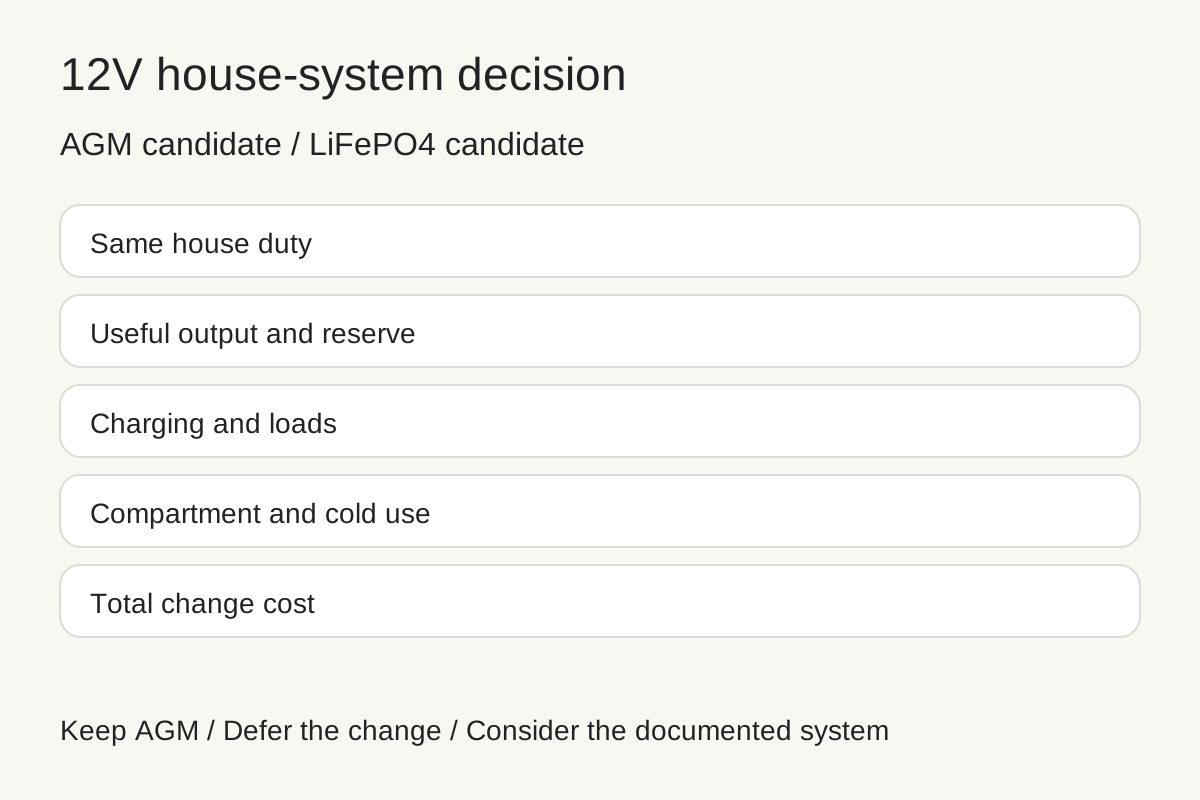
Here, “lithium” means lithium iron phosphate, or LiFePO4, for a 12V-class RV, boat or solar house system. AGM means absorbent glass mat lead-acid. This is not a comparison of engine-starting batteries, motorcycle batteries or every lithium chemistry, and it is not an installation guide.
Compare the house duty, not a chemistry label
The useful question is whether a particular battery system can support your house loads between charging opportunities—not which chemistry wins a headline. Century’s deep-cycle comparison frames the choice around how the battery will be used. Its product comparisons do not establish performance ratios for every AGM and LiFePO4 model.
Describe the problem before comparing replacements. Is the existing bank unable to cover the required time away from charging? Is space or carried mass the constraint? Or does the current AGM installation already do the job, with the proposed change offering benefits you would rarely use? These lead to different decisions.
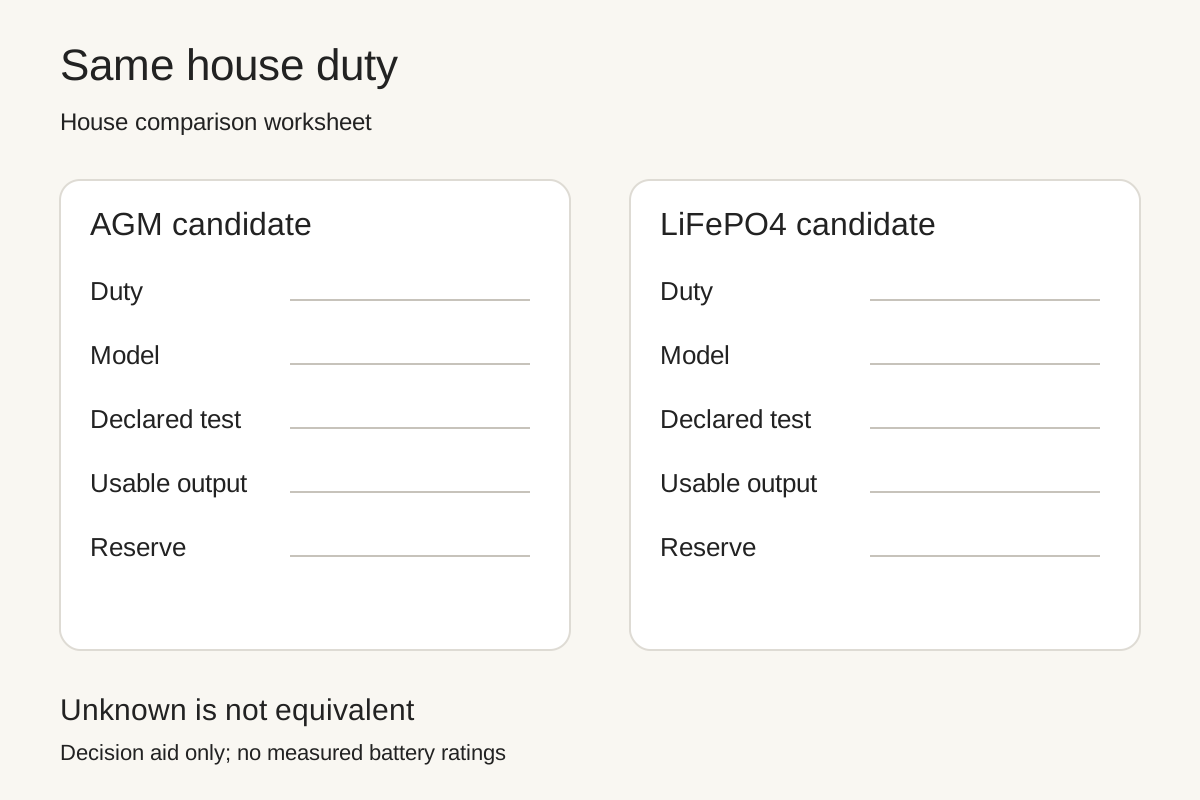
Use a worksheet with the existing AGM bank and a named LiFePO4 candidate. Record the same house duty for both. Leave a field unresolved when the supporting document or observation is missing; a blank field is not evidence that the alternatives are equivalent.
| Decision field | AGM bank or candidate | LiFePO4 candidate | What would justify a change? |
|---|---|---|---|
| Required house duty | Actual loads and time between charging | The same required duty | A documented shortfall or useful improvement |
| Useful output and reserve | Model conditions and relevant observations | Model conditions and relevant evidence | Comparable output at the chosen boundary |
| Compartment and mounting | Existing arrangement and candidate requirements | Dimensions, mass and installation requirements | A fit that is documented, not assumed |
| Charging and loads | Current equipment and operating conditions | Confirmed interfaces and required changes | A complete system review |
| Total change cost | Cost of retaining or replacing AGM | Battery plus confirmed system changes | A benefit worth the actual change cost |
This is a decision worksheet, not a test result. It deliberately allows “keep AGM” and “not enough evidence yet” as useful outcomes.
Compare useful output on the same basis
Equal nameplate Ah does not prove that two banks will deliver the same useful house duty. The Victron AGM Deep Cycle datasheet gives a declared discharge and temperature basis and describes reduced effective capacity at higher discharge current. Those conditions belong to that battery family; they do not justify a fixed usable-capacity percentage for all AGM batteries.
Victron’s LFP-Smart technical data distinguishes nominal capacity and energy and includes test conditions for its model columns. That does not make nominal energy a promise of delivered energy at your loads, temperatures and chosen stopping condition. It also does not create a matched AGM-versus-LiFePO4 performance test.
For a useful comparison, ask what each figure actually describes: which model, discharge conditions, temperature and end condition were used, and whether the value is nominal, measured or estimated. Keep the output boundary consistent. A battery-side value and a value available to the house loads should not silently be treated as the same thing.
Then separate required output from reserve. Record what must be supported before the next charging opportunity, what reserve you want, and the assumptions about battery condition. If the supplier documents cannot establish the candidate’s useful output under a relevant duty, mark the comparison unresolved. Do not fill the gap with a universal depth-of-discharge rule or a marketing ratio.
Scroll the diagram horizontally to read every label.
Check the compartment and cold-use conditions
Physical fit and cold operation must be checked for the selected models, not inferred from chemistry. Victron’s AGM datasheet and LFP-Smart technical page provide model-specific dimensions and mass. The lithium page also includes mounting conditions. A chemistry-level “lighter” claim cannot confirm that the chosen unit fits your compartment or that the proposed mounting arrangement is permitted.
Record the available space and actual installation arrangement alongside the candidate manual. Include the relevant orientation and connection requirements in the unresolved-items list. A favorable mass comparison is useful only when the complete installation requirements still fit the application.
Cold charging is a separate question from cold discharge. The LFP-Smart technical page lists these operating conditions separately. A stated ability to discharge in a cold condition is not permission to charge there. This article supplies no temperature threshold that can be applied to an arbitrary LiFePO4 battery.
For winter or seasonal use, identify when charging would occur and which exact model conditions govern it. Any claimed heating or temperature-control solution needs its own supporting documentation; it should not be assumed from a product label. If that information is missing, cold-use readiness remains unresolved even if the capacity comparison looks attractive.
Map every charging source and load interface
A bank replacement does not establish compatibility with the equipment around it. Victron’s Lithium Smart system-design manual describes interactions between its battery, BMS, chargers and loads. It is a named system example, not approval for a different battery or an arbitrary RV or boat conversion.
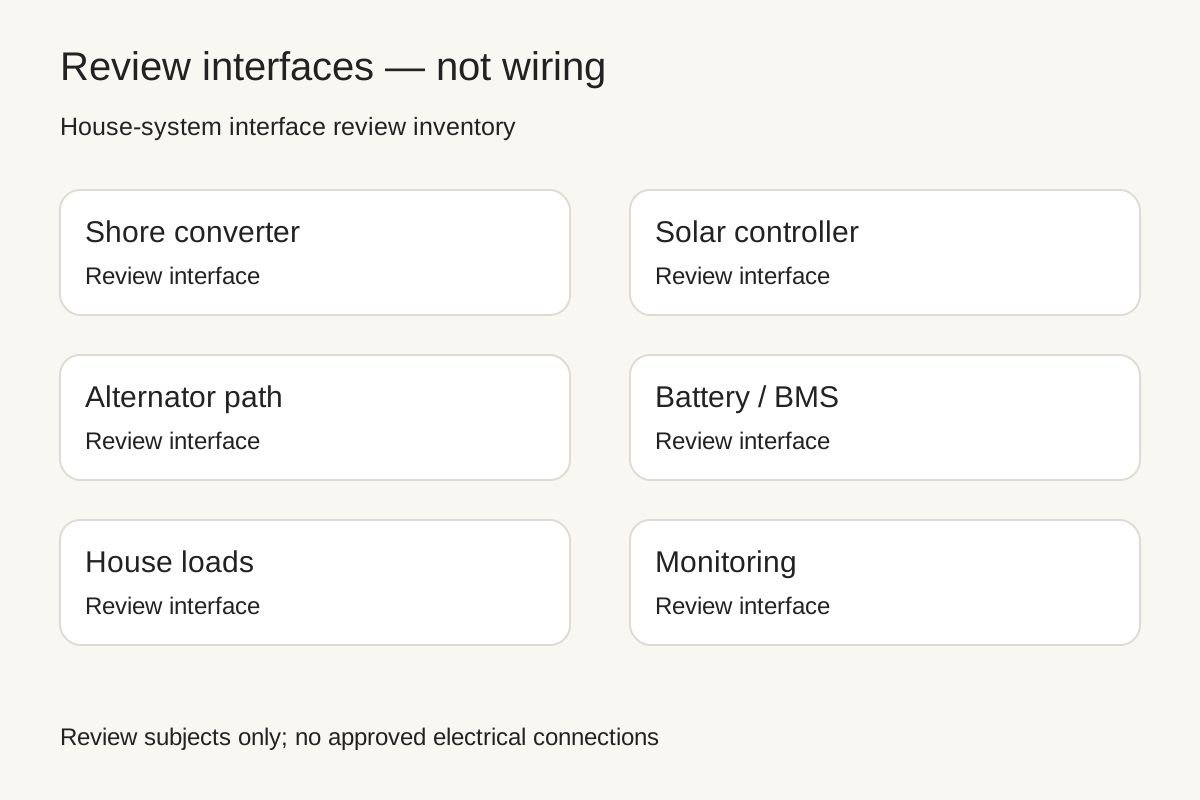
List every charging path that exists in the application: shore-power converter or charger, solar controller, alternator path and any separate charger. Add the inverter and other relevant house loads. For each item, record the exact model, applicable manual, required settings or controls, and whether the proposed battery system is documented to work with that interface.
| Interface | Evidence to obtain | What must not be assumed |
|---|---|---|
| Shore charger or converter | Exact equipment and battery requirements | An AGM setting proves LiFePO4 compatibility |
| Solar controller | Applicable charging and control documentation | A selectable chemistry label settles the whole system |
| Alternator path | Documented charging arrangement and protective controls | Nominal voltage alone establishes suitability |
| BMS and loads | Required control or disconnect behavior and interfaces | Battery protection means every load remains available |
| Monitoring | Applicable setup and measurement requirements | The previous configuration remains suitable |
The same Victron manual specifically warns about alternator overloading and describes protective approaches for its system. That is a reason to obtain an exact review of the alternator charging arrangement—not a universal instruction to install a particular DC-DC charger or copy a current limit.
Mark each interface “documented unchanged,” “documented change required” or “unresolved.” Keep the supporting document with the decision. A proposed conversion is not ready merely because the battery dimensions and voltage class look right; this inventory is not a wiring diagram or authorization to install it.
Scroll the diagram horizontally to read every label.
Price the system change, then choose keep, defer or consider
Compare the cost of the two relevant paths: retaining or replacing the AGM arrangement, and changing to the documented LiFePO4 system. A battery-only price comparison leaves out changes that may determine whether the proposal is worthwhile.
Use current, itemized inputs for the battery, confirmed charging or interface changes, installation and monitoring. Separate confirmed amounts from allowances and unknowns. State the use pattern and time horizon behind the decision. A longer advertised cycle life is not automatically realized economic value; OPTIMA’s battery comparison also raises the importance of actually using the cycle-life potential.
No matched current US installed-cost study or measured lifetime savings result is supplied here. Any project cost worksheet is therefore a scenario built from its stated inputs, not proof that one chemistry pays back within a particular period.
Use the completed comparison to choose an outcome:
- Keep AGM when the documented arrangement meets the required duty and the proposed change does not offer a benefit worth its actual scope and cost. If the present bank is inadequate, distinguish that condition from a finding that AGM as a category is unsuitable.
- Defer the change when useful output, charging interfaces, cold operation, physical installation or cost inputs remain unresolved. Write down the missing evidence rather than choosing a chemistry first.
- Consider the documented LiFePO4 system when its useful benefit answers your actual constraint, the model and system requirements are established, and the complete change cost fits the decision. This remains a conditional project choice, not a universal winner or installation approval.
The result should be more specific than “lithium is better.” For example, a hypothetical decision record might say: “The current bank meets the present duty, so retain it”; or “A candidate could address the space constraint, but charger compatibility is unresolved, so defer.” These are examples of decision wording, not tested systems or product-fit claims.
Bring the unresolved system requirements to the right next step
AntBattery’s existing marine and RV house-system requirements page describes an application-development path. It is not evidence of a stocked LiFePO4 replacement, universal drop-in fit, or installation and testing services.
If that requirements-review path is relevant, prepare the named candidate manuals, house-load and reserve requirements, charging-source and inverter models, compartment and cold-use conditions, and the unresolved items from the worksheet. Then send a house-system requirements enquiry with those inputs. Treat the response as the start of a documented application discussion—not confirmation of product availability, compatibility or a guaranteed result.
Sources and research limits
The manufacturer sources linked above were retrieved on 5 October 2026. Their model and application limits remain controlling; retrieval is not a publication or update date for this draft. Century and OPTIMA provide comparison context, while the Victron documents support only the named model and system conditions used here. This article presents an editorial decision method, not a laboratory test, cost study or DIY conversion procedure.